


Driving Productivity: Ford’s Mission to Bridge the Tech Divide
Across industries, the pace of technological change has never been faster. Tools like machine learning, automation, and artificial intelligence are driving efficiencies and productivity in knowledge-based sectors. Yet in the industries that make up the “Essential Economy”—construction, logistics, manufacturing, energy, and services—the benefits of innovation have not been felt as evenly. Productivity growth has slowed, and the connection between groundbreaking technologies and day-to-day output is not as strong as it once was.
Economists note that sectors like manufacturing, which once accounted for a large share of patent activity and innovation, have seen their role decline compared to information technology and services. This widening gap presents both a challenge and an opportunity: how to bring the power of modern tools to the people and businesses who quite literally keep the world running.
Small Businesses at the Heart of the Essential Economy
Nowhere is this challenge more visible than among small and medium-sized businesses (SMBs). They are the backbone of the U.S. economy, with over 36 million of them employing more than 40 percent of the national workforce. These businesses are crucial to communities and industries but often lack the resources, staff, or expertise to adopt complex new technologies.
For SMBs, what matters most is not cutting-edge complexity but practical simplicity. They need tools that are powerful enough to drive efficiency yet intuitive enough to be deployed without an army of IT specialists. The promise of technology, then, is not just about what it can do, but about how easily it can be woven into the daily rhythms of work.
To achieve this, companies must think in terms of ecosystems rather than isolated products. By combining hardware, software, services, and support into seamless solutions, innovation can reach beyond Fortune 500 firms to empower the millions of smaller enterprises that form the essential economy.
Ford’s Approach: Connectivity and Intelligence at Scale
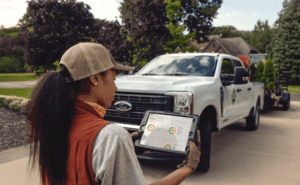
Ford has been working to close this gap by embedding intelligence directly into its commercial vehicles. Since 2019, every Ford commercial vehicle has been built with a modem, eliminating the need for aftermarket hardware. This connectivity unlocks real-time insights into vehicle health, tire pressure, GPS location, driver performance, and more. For business owners managing fleets, that means less downtime, smarter maintenance, and better planning.
Today, Ford has more than 12 million commercial vehicles on the road, with nearly a third already connected. That share is expected to double in the coming years. At the center of this strategy is Ford Pro Intelligence, a platform that processes over a billion data points each day. It integrates vehicles, parts, services, and repair support into a single ecosystem, making the behind-the-scenes complexity invisible to the user. For the businesses that rely on these vehicles, the result is higher uptime and fewer headaches.
This ecosystem approach also extends to service and support. Ford’s network of service centers and mobile repair vans ensures that businesses can stay on the move without losing valuable time to maintenance issues. By designing technology to work seamlessly in the background, Ford is focusing on what essential workers need most: reliability and simplicity.
Partnering With the Trades
Ford also recognizes that many of the companies most in need of innovation are in the trades—plumbing, HVAC, electrical work, agriculture, and construction. To better serve them, Ford has partnered with ServiceTitan, a leading software provider for field service industries.
This partnership links Ford’s connected vehicle data with ServiceTitan’s business management platform. For tradespeople, this means they can see fleet information, track maintenance, and integrate operational insights all in one place. The benefits are clear: lower costs, less downtime, and more time to focus on customers. For small businesses especially, the ability to redirect resources from vehicle management to growth opportunities can be transformative.
Looking Ahead: A National Innovation Agenda
The effort to bridge the access gap is not just a business challenge but a national one. Experts argue that the U.S. needs to diversify how it funds research and development, create better pathways to commercialize innovation, and spread innovation hubs beyond traditional tech centers. By tailoring tools to the unique needs of different businesses, companies like Ford are helping to put those ideas into practice.
This broader mission is also shaping Ford’s convening efforts. The upcoming Ford Pro Accelerate Summit will bring together leaders from business, public policy, and essential industries to share insights and tackle shared challenges. The goal is not only to celebrate progress but to ensure that essential workers—so often overlooked in the tech conversation—are equipped with the tools they need to thrive.
Bridging the gap between innovation and access is one of the defining challenges of our time. Essential workers and small businesses are the foundation of daily life, yet they remain at risk of being left behind in the technological revolution. By embedding connectivity, building intelligent ecosystems, and forging partnerships, Ford is working to ensure that innovation serves everyone—not just the few.
In doing so, it reframes technology not as a distant, complex ideal but as a practical ally, helping essential businesses grow stronger, more efficient, and more resilient for the future.

0 comment(s) so far on Driving Productivity: Ford’s Mission to Bridge the Tech Divide